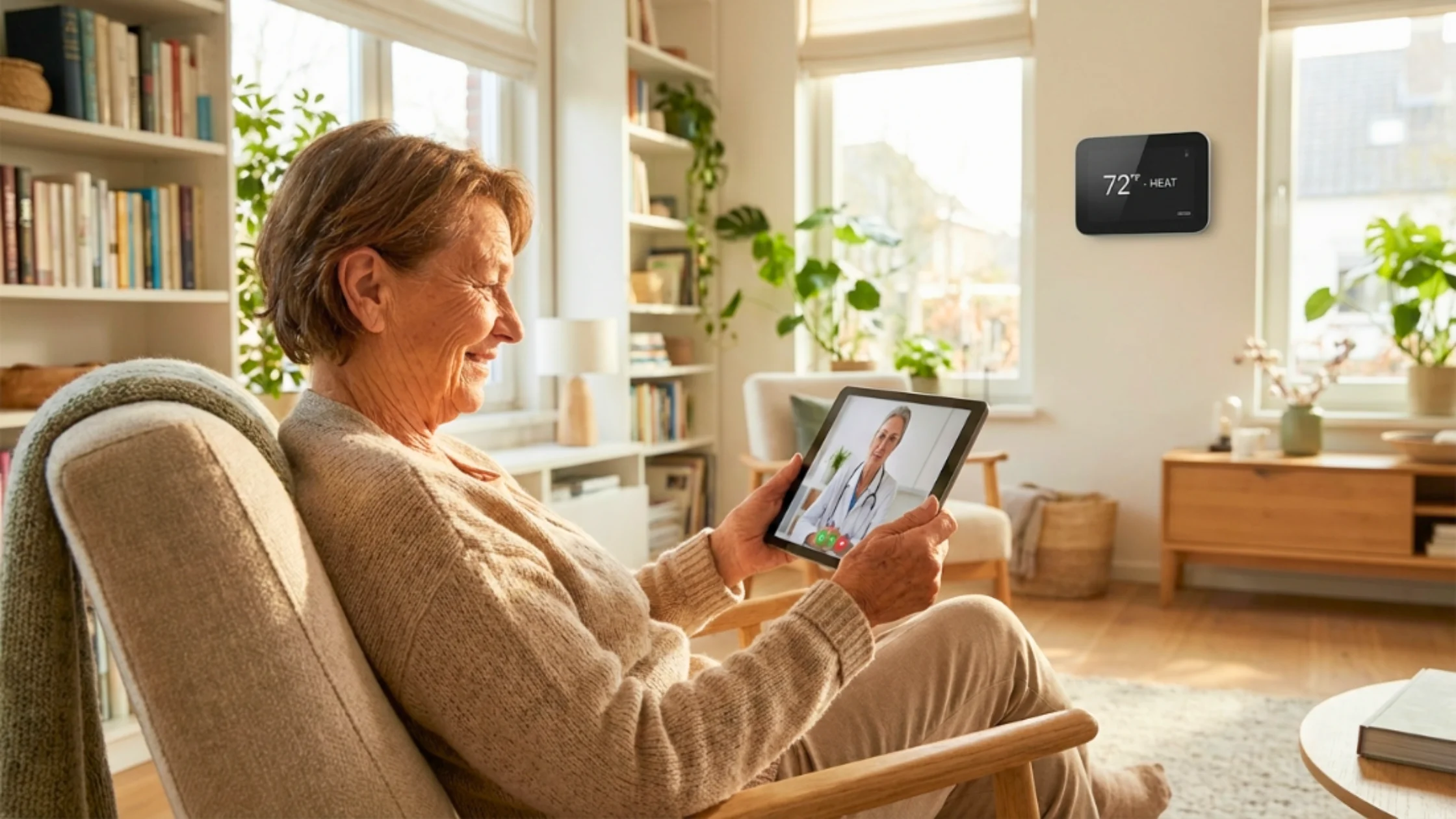
Rising healthcare and utility costs are a growing concern for many aging households. Aging in place is often discussed in terms of safety and accessibility, but long-term affordability is just as important.
Daily comfort in the home can directly affect physical health, which, in turn, influences how often medical care is needed.
Small, ongoing issues such as unstable indoor temperatures or delayed routine check-ups can gradually increase expenses.
Tools like telehealth services and smart thermostats offer practical ways to manage both comfort and care. When used together, they can help reduce everyday costs while supporting safe, independent living at home.
Why Health and Home Comfort Are Financially Connected
Indoor comfort is closely tied to physical health, especially for older adults. Extreme heat can increase dehydration and fatigue, while cold indoor temperatures can tighten muscles and joints, making movement more difficult. These changes can worsen existing health conditions and reduce daily energy.
When symptoms are not managed early, people are more likely to seek urgent medical care. Maintaining stable indoor temperatures helps prevent sudden changes in health.
A predictable, comfortable home environment reduces physical strain, supports better sleep, and allows the body to function more consistently. Preventing discomfort often avoids expensive treatment later.
What Telehealth Really Looks Like for Seniors Today
Telehealth allows medical appointments to be conducted via video or phone rather than traveling to a clinic. Many seniors use it for routine check-ins, medication reviews, and follow-up visits after treatment.
Common uses include discussing symptoms, reviewing test results, and managing long-term conditions. Virtual visits are often easier to schedule, which allows questions to be addressed quickly.
Telehealth reduces travel time, waiting rooms, and physical strain. It also makes it easier for caregivers or family members to join appointments from another location, improving communication and shared decision-making without requiring everyone to be in the same place.
How Telehealth Reduces Medical Costs Over Time
Regular virtual visits can identify problems before they become urgent. Early treatment often prevents expensive emergency room visits or hospital stays.
Telehealth also reduces travel-related expenses, such as fuel, parking, and ride-sharing. Caregivers may spend less time coordinating transportation or missing work for appointments.
For seniors managing multiple conditions, frequent remote monitoring supports consistent care. This steady attention reduces gaps in treatment. Over time, fewer urgent visits and smoother condition management create gradual, long-term savings while maintaining access to professional care.
Smart Thermostats and Health Stability
Indoor temperature directly affects breathing comfort, circulation, and sleep quality. Sudden heat or cold can trigger dizziness, fatigue, or breathing difficulty, especially for those with heart or lung conditions.
Smart thermostats keep temperatures steady throughout the day and night. They adjust automatically based on time, weather, and learned daily patterns.
Consistent climate control helps avoid temperature swings that stress the body. Seniors living alone benefit from automatic regulation that continues even if they forget to adjust settings during illness or rest.
Energy Savings from Smart Thermostat Automation
Smart thermostats lower energy use by adjusting heating and cooling only when needed. Instead of running continuously, the system responds to real occupancy and time patterns.
Over time, it learns daily routines and adjusts settings to match typical activity. This reduces wasted energy when rooms are empty or during long rest periods.
Remote access lets you change settings when away from home, preventing unnecessary heating or cooling. These steady, automatic adjustments can gradually reduce monthly utility bills without affecting comfort.
Combining Telehealth with Smart Home Climate Control
Stable indoor comfort supports better health, which reduces the need for urgent medical care. When the home environment is steady, symptoms linked to temperature changes are less likely to appear.
Telehealth provides quick access to medical advice for minor concerns. A virtual visit can address early symptoms before they become serious.
Together, these tools create a preventive system. Comfortable surroundings reduce physical stress, while regular check-ins catch small problems early. This combination lowers both medical and energy expenses over time.
Cost Expectations and Setup Considerations in the US
Telehealth is often covered by insurance or Medicare, though some services charge modest subscription fees.
A reliable internet connection and a smartphone, tablet, or computer are usually all that is required.
Smart thermostats involve a one-time hardware purchase and may need simple installation. Many utility companies offer rebates that lower the initial cost.
After setup, ongoing expenses are minimal. Savings depend on local energy prices, climate, and how consistently both tools are used.
Who Benefits Most from This Combination?
Seniors with breathing, heart, or joint conditions often benefit most from steady temperatures and regular monitoring. Older adults living alone benefit from easier access to medical advice without travel.
Families supporting parents from a distance can join virtual visits and adjust thermostat settings remotely if needed.
Households looking to balance safety with affordability often see steady, long-term benefits from using both tools together.
Common Misunderstandings About Telehealth and Smart Thermostats
Telehealth does not replace in-person doctors or emergency care. It adds another option for routine and follow-up visits when physical exams are not required.
Smart thermostats do more than save energy. They support health by maintaining stable indoor conditions. Both tools are designed to be simple and gradual rather than complex or technical.
Understanding their role encourages consistent use and realistic expectations.
Planning These Upgrades as Part of Aging in Place
Health and comfort tools work best when they fit naturally into daily routines. Starting with basic setups allows gradual learning without disruption.
These upgrades can be coordinated with other home improvements such as insulation, lighting, or safety modifications. Reviewing needs over time ensures the system continues to match changing health and mobility requirements.
Conclusion
Aging in place involves balancing safety, comfort, and long-term affordability. Stable home temperatures and easy access to medical care quietly prevent many avoidable problems.
Telehealth and smart thermostats work together to support prevention rather than emergency treatment.
By using technology as an ongoing support system instead of a short-term expense, families can reduce everyday costs while helping older adults remain healthy and independent at home.
Leave a Reply