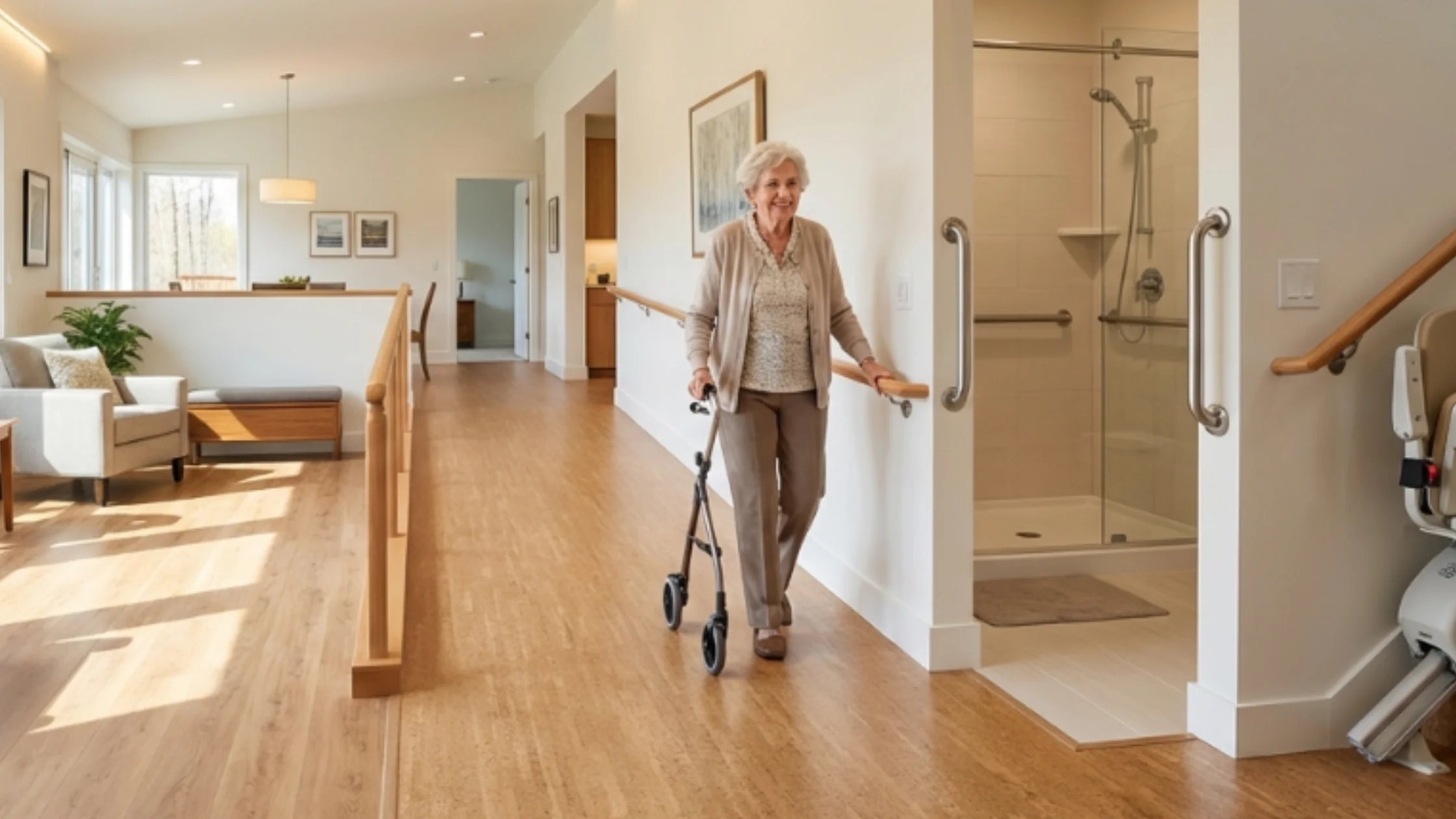
Aging in place works best when the entire home is considered, not just one room. Many people make changes only after an accident or near-fall, which can lead to rushed and costly decisions.
A whole-home accessibility checklist helps homeowners look at how they move through the house each day and plan improvements in a steady, practical way.
This approach focuses on safety, comfort, and independence without requiring a full remodel.
Let’s show how to identify, assess, and prioritise upgrades across the home so planning happens before problems occur.
What Whole-Home Accessibility Really Means?
A whole-home approach looks at how rooms connect, not just how each space functions on its own.
Isolated upgrades can help, but movement between areas is where many risks appear. Accessibility focuses on clear pathways, good visibility, and smooth daily routines from room to room.
Small differences in floor height, lighting, or layout can interrupt balance and confidence. Thinking ahead allows changes to work together instead of separately.
As mobility, strength, and vision change over time, coordinated improvements help the home remain usable and familiar rather than requiring repeated redesigns.
Why Prioritising the Right Fixes Matters?
Falls often happen while moving between spaces, such as stepping from a bedroom into a hallway or from the kitchen to the living area. Waiting too long to make changes can increase both safety risks and repair costs.
A structured checklist helps focus on upgrades with the greatest impact rather than spending money on low-priority updates. Planning in order of risk keeps the home safer while protecting the budget.
Prioritising also makes upgrades easier to manage, since improvements can be completed gradually rather than all at once.
Entryways and Exterior Access: First Priority
The home’s entrance sets the tone for safe movement in and out each day. Uneven steps, high thresholds, or loose paving can become trip hazards.
Adding secure handrails on both sides of the steps improves balance and stability. Outdoor lighting near doors, walkways, and driveways helps reduce missteps after dark.
Non-slip surfaces on porches and entry points improve traction in rain or frost. Safe entry and exit matter not only for daily routines but also for emergencies and medical visits. Improving this area first creates a safer starting point for all other changes.
Bathroom Accessibility Checklist
Bathrooms combine water, hard surfaces, and tight spaces, which makes them one of the highest-risk areas in the home. Walk-in showers or low-threshold tubs remove the need to step over high edges.
Grab bars placed near toilets and bathing areas provide steady support when sitting or standing. Non-slip flooring and proper drainage help prevent slips on wet surfaces. Bright, even lighting improves visibility, while easy-to-reach storage reduces bending and stretching.
Because bathing is a daily activity, bathroom upgrades often deliver the greatest safety improvement in the shortest time.
Kitchen Accessibility Checklist
The kitchen supports daily independence, so safe movement and easy reach are important. Cabinets that pull out or down allow items to be accessed without climbing or bending deeply.
Clear walking paths and slip-resistant flooring reduce the risk of falls while carrying food or cookware. Placing appliances at comfortable heights prevents strain on the back and shoulders. Simple, clearly marked controls are easier to use than complex panels.
Good task lighting over counters and sinks improves visibility for food preparation. Practical kitchen changes can make everyday routines safer and less tiring.
Staircases and Hallways: Reducing Transition Risks
Moving between levels or rooms often presents more risk than staying in one place. Handrails on both sides of staircases provide extra stability and support.
Consistent step height and clearly visible stair edges make footing more predictable. Hallways should remain wide and clutter-free so mobility aids can pass safely. Improved lighting helps with nighttime navigation when vision and balance are more sensitive.
Because these areas connect all rooms in the home, small improvements here can greatly reduce the chance of trips and falls during everyday movement.
Bedrooms and Living Areas: Comfort and Safety Combined
Bedrooms and living rooms should feel comfortable while still supporting safe movement. Beds set at an appropriate height make sitting and standing easier.
Clear floor space around the bed and main seating areas allows stable turning and walking. Furniture should be sturdy and positioned to avoid tight paths. Loose rugs, cords, and small obstacles should be removed to prevent tripping.
Light switches and outlets placed within easy reach reduce unnecessary stretching. These simple adjustments help maintain independence without making the space feel clinical or restrictive.
Flooring and Lighting Throughout the Home
Consistent flooring between rooms helps prevent missteps caused by sudden height or texture changes. Non-slip surfaces in high-traffic areas improve grip and confidence while walking.
Good lighting supports visibility at all times of day. Layered lighting, such as overhead fixtures combined with lamps, reduces shadows and glare.
Motion-activated lighting in bathrooms and hallways can guide safe movement at night without the need to search for switches.
When flooring and lighting work together, daily navigation becomes smoother and more predictable.
Smart Home Technology That Supports Accessibility
Technology can add another layer of support when used alongside physical upgrades. Voice-activated devices let you manage lights, calls, and reminders without reaching for switches.
Motion sensors and fall-detection tools can provide alerts if something unusual happens. Smart lighting and thermostats can adjust automatically to improve comfort and visibility. These tools should simplify daily routines rather than add complexity.
Technology is most helpful when it complements grab bars, non-slip floors, and clear pathways instead of replacing them.
Budget-Friendly Accessibility Improvements to Start With
Many effective upgrades are low-cost and quick to install. Adding grab bars, improving lighting, and removing loose rugs can be done without major construction.
Safety features should take priority over cosmetic updates. Some tasks, such as installing basic lighting or storage organisers, may suit DIY work. Structural changes, including stair or doorway modifications, usually require professional help.
Starting with small improvements builds confidence and often reveals which larger upgrades will be most useful later.
Creating a Personal Aging-in-Place Priority Plan
A clear plan matches home changes to current abilities while allowing for future needs. Family members or caregivers can help identify daily challenges and review options together.
Professional home assessments can provide guidance when major changes are considered. Plans should be reviewed regularly as mobility and routines change.
Updating priorities over time helps ensure each improvement continues to support safety and independence rather than becoming outdated.
Conclusion
Whole-home accessibility helps people live safely and independently for longer. Focusing on the most important changes first keeps planning practical and manageable.
Using a checklist makes it easier to decide what to fix now and what can wait. Step-by-step improvements often work better than large, rushed projects.
With steady planning and clear priorities, the home can remain a comfortable and supportive place to live as needs change over time.
Leave a Reply