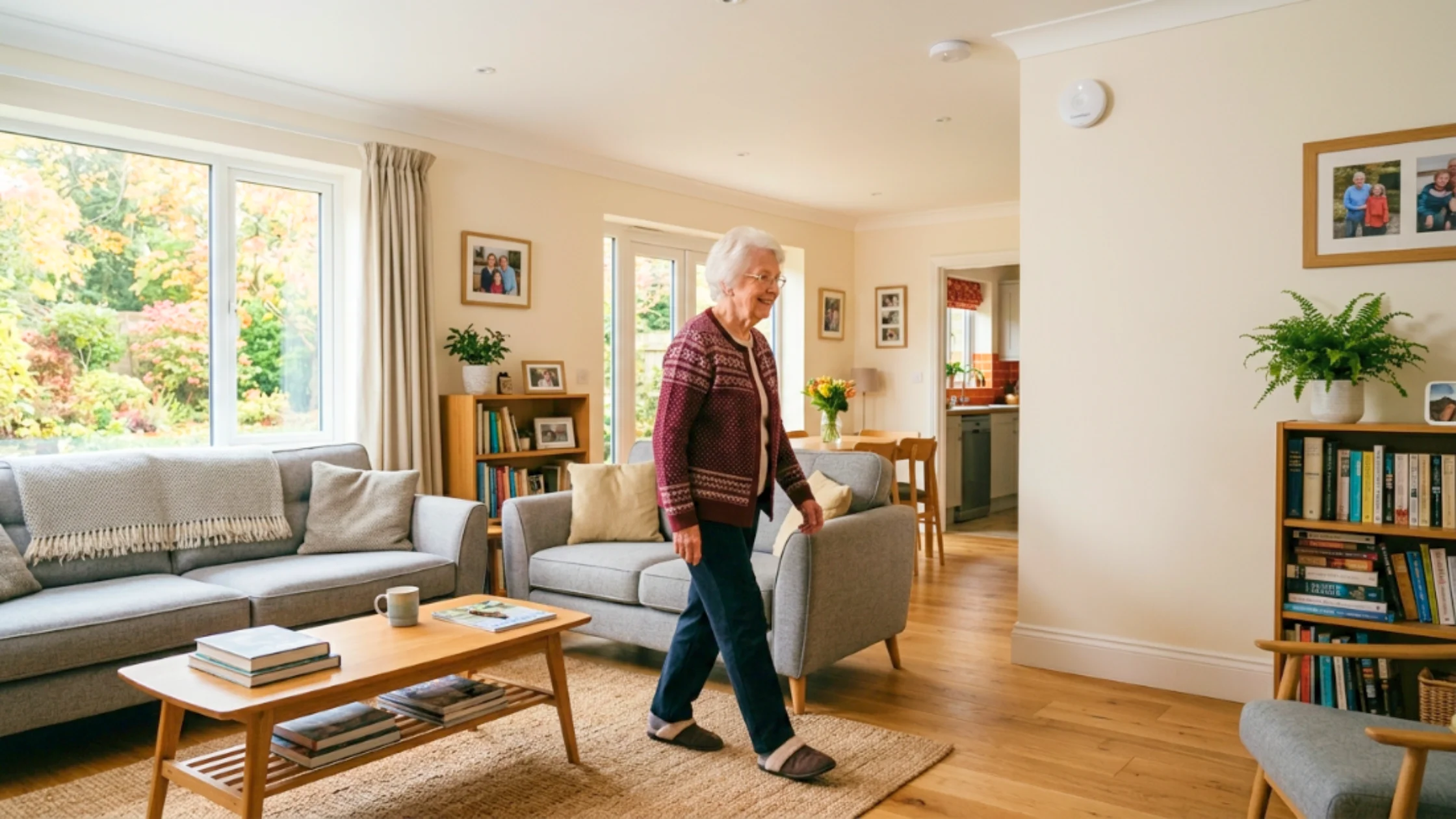
Many seniors and families feel uneasy about placing cameras inside the home for safety monitoring.
Constant visual surveillance can feel intrusive, especially in private spaces such as bedrooms and bathrooms.
At the same time, families still want reassurance that unusual events will not go unnoticed. New AI-powered systems are emerging that can detect falls and changes in daily activity without using cameras or microphones.
These privacy-first tools work quietly in the background and are becoming a preferred option for independent living. This guide explains how these systems work, who they suit best, and what to consider before choosing one.
Why Privacy Is a Major Concern in Aging-in-Place Monitoring?
Being constantly watched can change how a person feels in their own home. Even when monitoring is meant to improve safety, visible cameras may create discomfort, self-consciousness, or resistance to using the system.
Many seniors strongly object to cameras in bedrooms and bathrooms, where privacy is deeply personal.
Trust and dignity are central to independent living. If monitoring feels invasive, people may avoid certain rooms or change normal routines.
Effective safety tools must protect well-being without making the home feel like a place under observation.
What “No-Camera” Monitoring Systems Actually Use Instead?
Instead of video or audio recording, privacy-first systems use small sensors that detect motion and presence. These sensors track when someone enters or leaves a room and how long they stay there.
The system builds a general picture of daily activity by measuring the flow of movement between rooms. AI software studies these patterns rather than collecting personal images or sounds.
Because no visual data is captured, the system cannot show what a person is doing. It only recognises that the movement happened. This approach is often called ambient or passive monitoring because it observes activity levels without direct observation.
How AI Detects Falls Without Wearables or Cameras?
These systems look for sudden changes in motion followed by unexpected stillness. For example, if steady walking stops abruptly and no movement follows, the system may recognise a possible fall.
Sensors can detect floor vibration, interrupted walking patterns, or unusual body positioning. Over time, the AI learns the person’s normal pace, posture changes, and daily routes.
Instead of reacting to a single sensor event, the system compares current data with established patterns.
It helps reduce false alerts caused by dropping an object or sitting down quickly. Pattern recognition allows the system to respond to real risks while ignoring harmless movement.
Identifying Irregular Activity Patterns Before Emergencies
Privacy-first monitoring also looks for changes in daily routines. If someone usually enters the kitchen each morning but no movement is detected there, the system can send a gentle alert.
Extended inactivity during normally active hours may signal fatigue or illness. Increased nighttime wandering might suggest confusion or restlessness.
These alerts often lead to a simple check-in call rather than an emergency response. Early awareness gives families time to respond calmly, which can prevent minor concerns from becoming serious incidents.
Privacy-First Monitoring vs Wearable Alert Devices
Wearable alert devices rely on the user remembering to put them on and keep them charged. Many seniors forget to wear them consistently, especially at night or while bathing.
Environment-based monitoring works without anything attached to the body. Protection remains active at all times inside the home.
For people who dislike watches or pendants, passive monitoring can feel more natural. Some families choose to use both systems together so one provides backup if the other is unavailable.
Where Privacy-First Systems Work Best Inside the Home
These systems work best in areas with regular movement. Hallways and living rooms help establish clear activity patterns because people frequently pass through them.
Bedrooms benefit from monitoring because they show when someone rises in the morning or rests unusually long. Bathrooms, despite being private spaces, can still be monitored safely without cameras, enabling detection of high-risk events such as falls.
Effective placement matters more than installing many sensors. A few well-positioned sensors create reliable activity tracking without overwhelming the system.
Who Benefits Most From No-Camera AI Monitoring
This approach suits seniors who live alone but value privacy. It is also helpful for older adults with mild cognitive decline who may forget to press an alert button.
Families supporting parents from a distance gain reassurance without installing visible cameras. These systems work well when independence and dignity are top priorities, allowing monitoring to happen quietly in the background.
Cost and Setup Expectations in the US
Most privacy-first systems involve an upfront hardware cost and an ongoing monthly subscription. Hardware prices vary based on the number of rooms being monitored.
Installation is often simple, with small sensors attached to walls or ceilings, requiring minimal wiring. Subscription fees usually cover monitoring services, data analysis, and software updates.
Starting with essential areas can keep costs manageable. Additional sensors can be added later as needs change or routines evolve.
Limitations and Realistic Expectations
These systems do not replace medical care or in-person support. They depend on stable internet and power to function continuously.
Because they rely on routine patterns, large changes in furniture layout or daily habits may temporarily affect accuracy. They also do not detect detailed medical information such as heart rate or blood pressure.
Understanding these limits helps families use the system as one layer of protection rather than a complete safety solution.
Integrating Privacy-First Monitoring Into an Aging-in-Place Plan
Privacy-first monitoring works best alongside physical safety upgrades. Grab bars, improved lighting, and non-slip flooring reduce everyday fall risk, while AI monitoring adds early awareness.
Alerts can serve as preventive signals instead of panic triggers. Families can check in early rather than waiting for emergencies.
Layered safety measures create stronger protection than relying on a single device or approach.
Conclusion
Safety monitoring can exist without compromising personal boundaries. Quiet, background support allows daily routines to continue naturally while still providing protection.
Early awareness of unusual patterns helps families stay ahead of risk rather than react to emergencies.
By choosing unobtrusive solutions that respect privacy, seniors can remain independent at home while families stay informed and reassured.
Leave a Reply