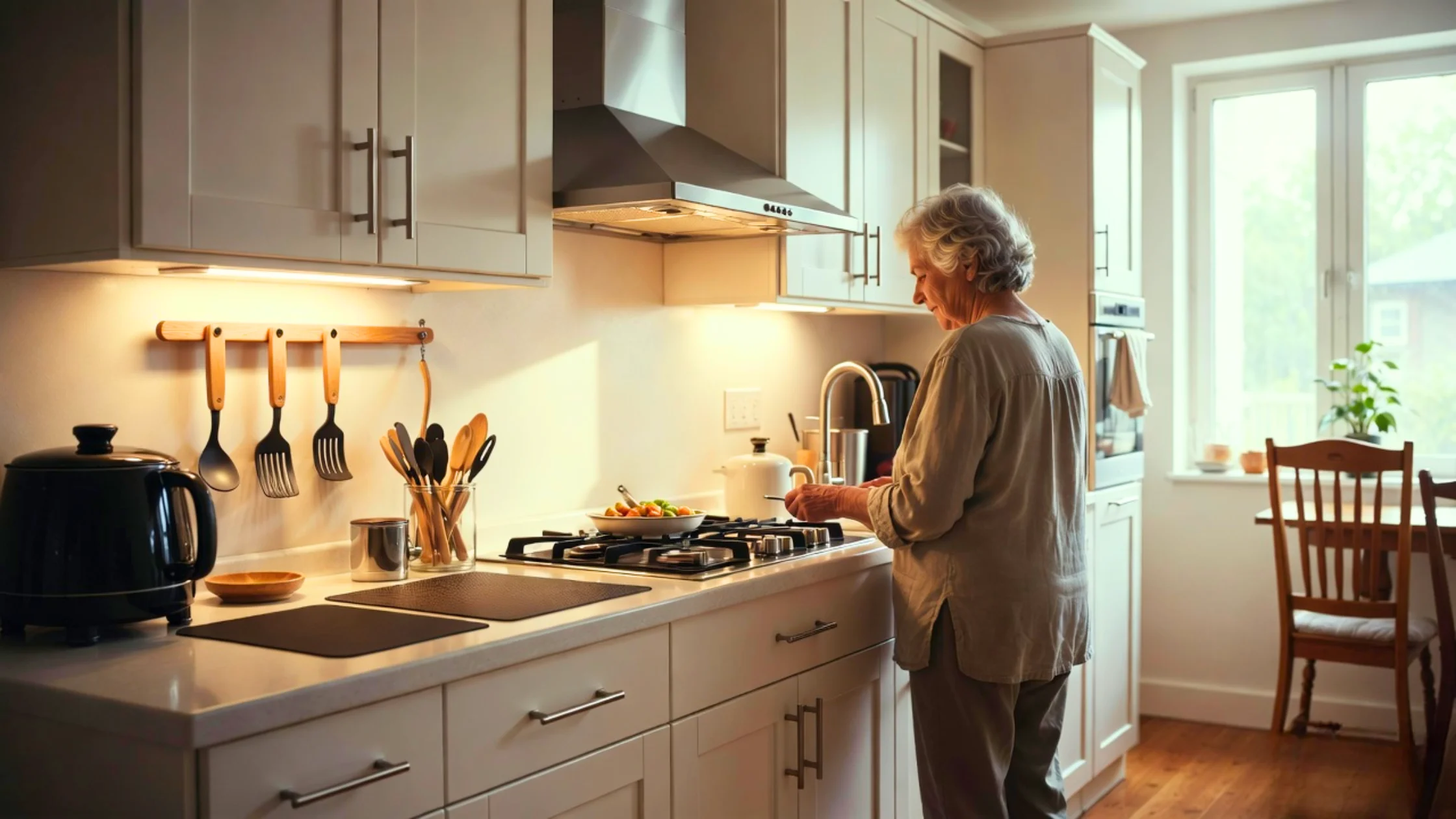
The kitchen is one of the most frequently used spaces in the home. It’s also a place where daily tasks like cooking, reaching, lifting, and standing for long periods can become more difficult with age.
As strength, balance, and joint flexibility change, common kitchen activities may require extra effort or feel less secure.
Small design issues that once seemed manageable can gradually increase the risk of strain, slips, or falls.
Thoughtful kitchen modifications can make a meaningful difference for those planning to age in place.
Many of these changes are simple, practical, and focused on making everyday routines safer and easier rather than fully remodeling the space.
This guide explains why kitchen safety matters, common risks to watch for, and practical modifications that support independence and comfort over time.
Why Kitchen Safety Matters for Aging in Place?
For older adults, the kitchen plays a central role in daily independence. Preparing meals, making coffee, or reaching for items throughout the day requires steady movement and coordination.
Age-related changes such as reduced grip strength, joint stiffness, slower reaction time, or vision changes can increase the likelihood of accidents. Slippery floors, awkward storage, or poor lighting can turn routine tasks into potential hazards.
Because the kitchen is used multiple times each day, even small improvements can significantly reduce physical strain and improve confidence. Addressing kitchen safety early helps support aging in place without disrupting familiar routines.
Common Kitchen Risks for Seniors
Many kitchen risks develop gradually and are often overlooked until they become difficult to manage.
High cabinets that require reaching overhead or using step stools are a common concern. Deep shelves can also make it hard to see or safely access items.
Slippery flooring, cluttered walkways, and loose rugs increase the risk of falls, especially when carrying hot food or cookware. Poor lighting can make it difficult to see spills, edges, or controls clearly.
Heavy pots, hard-to-grip utensils, and appliances with small or confusing controls can add unnecessary strain. Together, these issues can make the kitchen less safe and more tiring to use over time.
Easy-Reach Cabinets and Storage Solutions
Storage design plays a major role in kitchen safety and comfort.
Easy-reach cabinets, such as pull-down shelves or pull-out drawers, reduce the need to reach overhead or bend down low. Drawer-based storage allows items to be accessed at waist or chest height, where balance is more stable.
Lazy Susans and corner cabinet organizers help bring items forward, reducing the need for users to reach deep into cabinets. Keeping frequently used items within easy reach reduces strain and lowers the risk of losing balance.
These solutions help maintain independence by making everyday kitchen tasks easier and more predictable.
Adaptive Kitchen Tools That Support Independence
Adaptive kitchen tools are designed to make cooking and food preparation more comfortable without changing how tasks are performed.
Lightweight cookware, easy-grip utensils, and jar openers reduce strain on hands and wrists. Cutting boards with stabilizing edges and non-slip bases improve control during food preparation.
Appliances with simple controls, large displays, and clear markings are often easier to use than complex models with multiple settings. These small adjustments can make a noticeable difference in reducing fatigue and frustration.
Adaptive tools work best when they fit naturally into existing routines rather than requiring major changes in habits.
Countertops, Sinks, and Workspaces for Senior Comfort
Comfortable workspaces help reduce joint stress and support safer movement.
Countertop heights that allow food preparation without excessive bending can ease strain on the back and shoulders. Some kitchens benefit from having varied counter heights to support both seated and standing tasks.
Shallow sinks reduce the need to lean forward, while lever-style or touch-activated faucets are easier to operate for those with arthritis or reduced grip strength.
Creating clear knee space under a section of the counter allows for seated tasks, offering flexibility as mobility needs change.
Flooring and Lighting Upgrades for Kitchen Safety
Flooring and lighting are two of the most effective safety upgrades in any kitchen.
Non-slip flooring improves traction, especially in areas prone to spills. Avoiding loose rugs or uneven transitions between rooms helps reduce tripping hazards.
Good lighting improves visibility and confidence. Under-cabinet lighting helps illuminate work surfaces, while brighter overhead lighting makes it easier to see obstacles and controls.
Motion-activated lighting can be useful during early mornings or evenings, reducing the need to search for switches in low light.
Smart Kitchen Technology for Aging in Place
Smart technology can provide additional support when used carefully.
Voice-activated assistants let users set timers, ask questions, or control lights without having to move around the kitchen. Smart appliances with safety shut-off features can reduce the risk of leaving burners or ovens on.
Technology should complement physical modifications, not replace them. Simple, reliable tools are more helpful than advanced systems that require frequent interaction or adjustments.
Choosing technology that works quietly in the background helps maintain a familiar kitchen environment.
Cost of Kitchen Modifications for Aging in Place
Kitchen modification costs vary depending on the scope of changes.
Minor upgrades, such as adding better lighting, installing pull-out shelves, or switching to non-slip flooring, are often affordable and can be completed without major construction.
More involved changes, such as modifying cabinetry or adjusting countertop heights, may cost more but can still be planned in stages to manage expenses.
In many cases, keeping the existing kitchen layout helps control costs while still improving safety and usability.
Kitchen Modifications for Apartments and Smaller Homes
Aging in place is possible even in apartments or compact kitchens.
Space-saving storage solutions, removable shelving, and portable adaptive tools can improve safety without permanent changes. Lighting upgrades and non-slip mats are often renter-friendly and easy to install.
Prioritizing the most frequently used areas allows seniors to make meaningful improvements without altering the entire space.
Planning Kitchen Modifications for Long-Term Use
When planning kitchen changes, it’s important to think beyond current needs.
Mobility and strength may change over time, so choosing flexible solutions can prevent the need for future renovations. Gradual upgrades allow adjustments as needs evolve.
Balancing comfort, safety, and budget helps create a kitchen that supports independence for years rather than requiring rushed changes later.
Conclusion
Kitchen modifications can play an important role in supporting safe, independent living at home as people age.
By addressing common risks and focusing on practical upgrades, homeowners can make daily routines easier and more comfortable. Many improvements are simple, affordable, and adaptable over time.
Thoughtful planning helps ensure the kitchen remains a supportive space that aligns with changing needs while preserving independence and confidence at home.
Leave a Reply