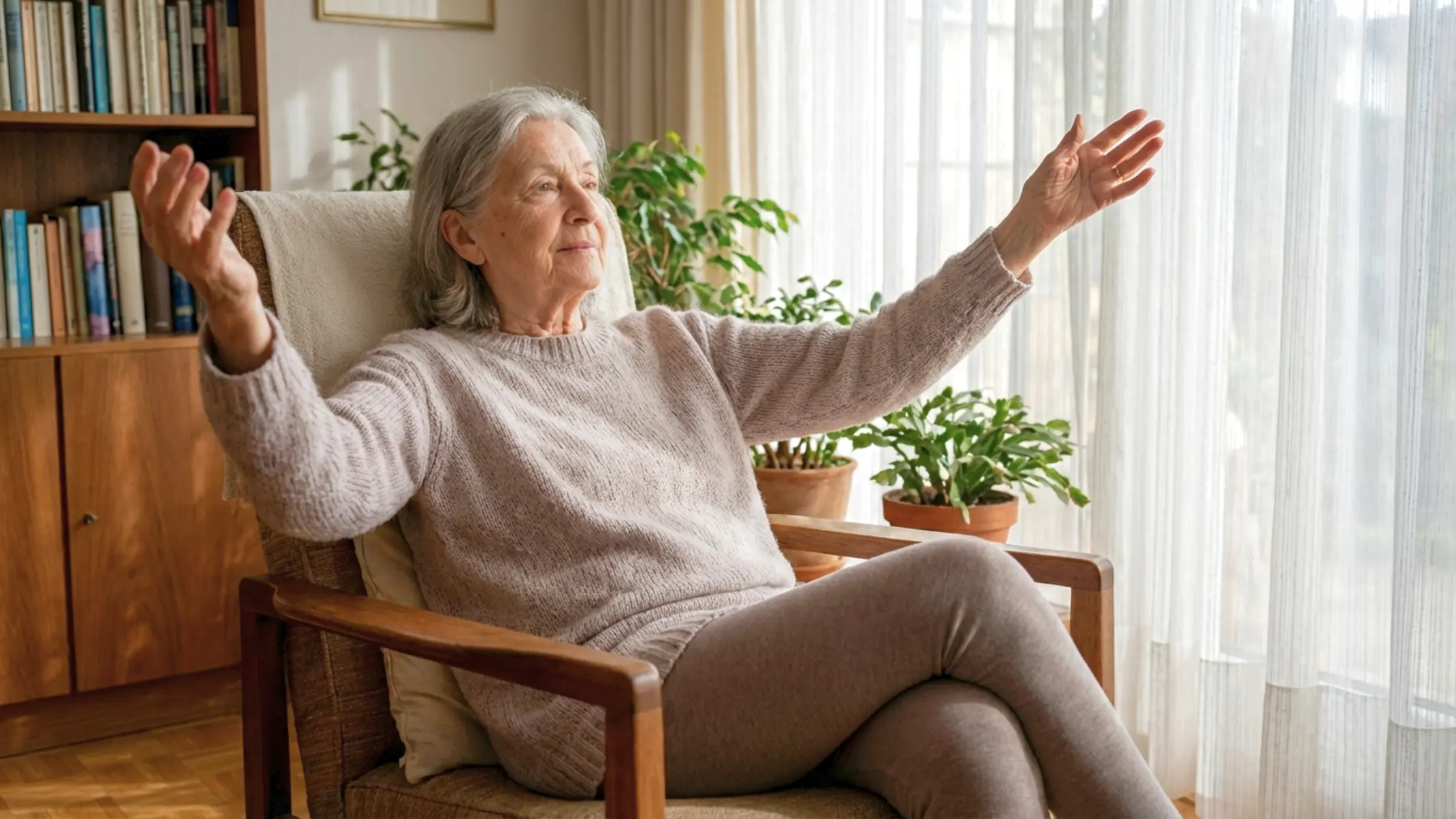
Staying physically active often becomes harder with age, yet it becomes more important than ever. Many seniors find traditional workouts too tiring, painful, or intimidating.
Joint stiffness, balance concerns, and fear of falling can make one feel unsafe rather than safe. Chair yoga and other gentle exercises offer a safer, low-impact way to stay active without strain.
These simple movements can be done at home with minimal space and no special equipment.
In this guide, readers will learn how small, regular movements can improve balance, mobility, and confidence for safer, more independent aging in place.
Why Movement Matters for Aging in Place?
Regular movement helps older adults stay independent at home. When the body stays inactive for long periods, muscles weaken, and joints stiffen. It makes standing, walking, and turning more difficult and increases the risk of falls.
Gentle daily exercise keeps the body responsive and steady. The goal is not intense fitness training but simple, consistent motion. Even short sessions each day can support safer movement around the home.
Over time, these small habits make everyday tasks easier and reduce the chance of losing mobility.
What Is Chair Yoga and Gentle Exercise?
Chair yoga and gentle exercise involve slow, controlled movements done while seated or lightly supported by a chair.
Unlike traditional yoga or gym workouts, these routines avoid strain and complex poses. The chair provides stability, which helps seniors move with more confidence and less fear of falling.
Movements focus on stretching, breathing, and light strengthening. These exercises can be adapted for a range of abilities, including those who find standing difficult. The goal is safe, supported motion that improves flexibility and strength without pressure or discomfort.
Key Physical Benefits for Seniors
Gentle exercises improve balance by strengthening the muscles that help the body stay upright. Better coordination makes walking and turning safer.
Regular stretching increases joint flexibility, reducing stiffness from prolonged sitting. Light strength work supports everyday tasks such as standing from a chair or reaching overhead. Improved ankle and leg movement helps with steadier steps.
These benefits make it easier to move around the home without strain. Over time, smoother, more controlled movement lowers fall risk. Small, daily improvements add up and support long-term independence in daily living.
Mental and Emotional Benefits of Gentle Exercise
Slow, steady movement can calm the mind and reduce stress. Gentle exercise releases natural mood-boosting chemicals that help seniors feel more positive and relaxed. Regular activity builds confidence in physical ability, which reduces fear of movement.
Following simple routines also keeps the brain engaged and supports focus. Movement provides structure to the day and creates a sense of accomplishment.
These emotional benefits are just as important as physical ones. Feeling capable and steady encourages seniors to stay active and connected to daily life.
Chair Yoga and Fall Prevention
Supported movements improve body awareness and posture control. Strengthening the muscles around the hips, legs, and core helps the body stay stable when standing or walking.
Practising slow transitions between sitting and standing improves confidence. Gentle routines reduce the fear of falling, which often limits movement.
When seniors feel safer, they move more naturally. Consistency is more important than long sessions. A few minutes each day add up to steady progress. Over time, better balance and muscle control lower the chance of sudden slips or missteps inside the home.
Simple Chair Yoga and Gentle Exercise Routines to Try
Start with a warm-up by gently rolling the shoulders and turning the head side to side. Stretch the neck by slowly tilting the head toward each shoulder.
Reach both arms forward and then up to stretch the back. While seated, lift one knee at a time to strengthen the legs.
Rotate the ankles slowly to improve foot stability. Gently twist the torso to each side to keep the spine flexible. Finish with deep breathing: inhale slowly through the nose and exhale through the mouth.
Practise for 10–15 minutes, three to five times per week, increasing gradually as comfort improves.
Creating a Safe Exercise Space at Home
Choose a strong, stable chair that does not move or roll. Place it on non-slip flooring to prevent shifting. Clear the area around the chair to allow free arm and leg movement. Good lighting helps avoid missteps.
Keep supportive items nearby, such as a wall or sturdy table, if extra balance help is needed. Wear comfortable clothing and supportive shoes or non-slip socks.
A safe setup makes exercise feel secure and encourages regular practice without worry.
Who Should Consider Chair Yoga and Gentle Exercises
These routines are helpful for seniors with limited mobility or those returning to activity after illness. Older adults who feel unsteady when standing benefit from supported movement.
Anyone concerned about balance or fall risk can start safely while seated. Chair yoga is also useful for people who spend long hours sitting and want to stay flexible.
It suits beginners and those who prefer calm, low-pressure wellness habits that fit easily into daily life.
Common Misconceptions About Exercise for Seniors
Exercise does not need to be fast or intense to be effective. Gentle movement still builds strength and flexibility.
Age does not stop the body from improving with regular activity. Slow, supported motion is often safer than sudden effort.
Many seniors worry about injury, but careful, seated routines reduce that risk. The focus is steady progress, not performance.
Integrating Gentle Exercise Into an Aging-in-Place Plan
Movement works best alongside home safety features. Non-slip flooring, grab bars, and good lighting support safe practice. Gentle exercise can be combined with health monitoring tools or reminders to stay consistent.
Making movement part of the daily routine builds habits that last. These small actions help maintain strength and balance for long-term independence.
Conclusion
Safe, simple movement helps older adults stay independent, not at risk. Chair-based exercises are flexible, low-impact, and easy to start at any level of ability. Regular gentle activity builds strength, balance, and confidence for daily life at home.
Seniors and families can view these routines as daily support, not strenuous workouts. Small, steady movements are among the most practical ways to age in place with comfort and control.
Leave a Reply