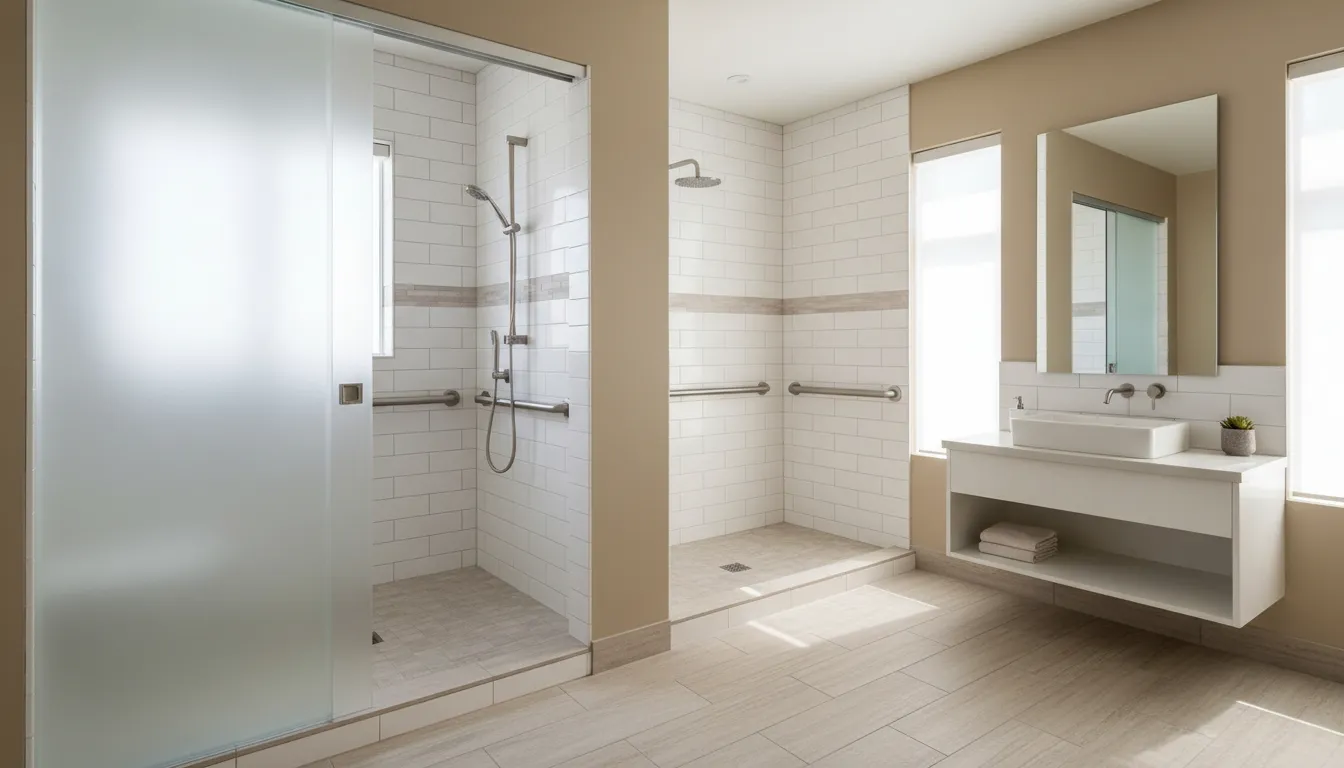
Bathrooms are often the first space homeowners choose to remodel when planning to age in place – and for good reason.
Slips, tight spaces, and hard-to-reach fixtures make bathrooms one of the most common areas for falls among older adults.
At the same time, many people worry that remodeling will be expensive, disruptive, or difficult to manage.
In reality, a bathroom remodel is one of the most practical home modifications for aging in place, focusing less on luxury and more on safety, comfort, and independence.
This step-by-step guide explains what an aging-in-place bathroom remodel involves, how much it typically costs in the U.S., whether it adds value to your home, and how to choose the right contractor.
What an Aging-in-Place Bathroom Remodel Really Means
An aging-in-place bathroom remodel goes beyond updating tiles or fixtures for appearance.
Unlike a standard remodel, it focuses on making the space safer, easier to use, and comfortable for the long term. This includes upgrading accessibility, reducing fall risks, and making certain the bathroom can adapt as mobility needs change over time.
The end goal is to support the daily routines of seniors without any hassles or worry.
Planning these changes early can lead to better design choices, lower costs, and fewer rushed decisions later, especially compared to remodeling after an injury or health setback.
Step 1: Identify Safety Risks in Your Current Bathroom
Start by taking a thorough look at how your current bathroom functions day to day.
Slippery floors, especially when wet, are a major hazard, as are tight spaces that make it hard to move safely.
High tub walls and narrow doorways can become difficult to manage as balance or joint strength changes.
Poor lighting and fixtures that require bending or reaching also increase the risk of falls.
Many bathroom accidents happen because of small, overlooked issues that gradually become harder to handle.
Identifying these risks early helps prevent injuries and makes it much easier to plan the right upgrades.
Step 2: Common Bathroom Modifications for Aging in Place
These bathroom modifications for seniors are designed to reduce fall risk while keeping daily routines easier and more comfortable.
One of the most common upgrades is replacing a traditional bathtub with a walk-in or roll-in shower, which removes the need to step over high edges.
Grab bars are another important addition and are often installed with reinforced walls to maintain long-term stability.
Non-slip flooring for elderly homes helps strengthen traction, especially in wet areas.
Comfort-height toilets and accessible sinks reduce strain on knees and hips, making sitting and standing easier.
Better lighting, including brighter overhead lights and well-placed task lighting, improves visibility and security.
Temperature-controlled faucets and anti-scald valves add another layer of protection.
Together, these changes create a bathroom that supports safety, independence, and ease of use as needs change over time.
Step 3: How Much Does an Aging-in-Place Bathroom Remodel Cost?
The cost of an aging-in-place bathroom remodel in the U.S. can vary widely depending on the scope of work.
Minor upgrades, such as installing grab bars, improving lighting, or adding non-skid flooring, may cost a few thousand dollars.
More extensive remodels – like replacing a bathtub with a walk-in shower or widening doorways – can range much higher, especially if plumbing or electrical changes become necessary.
Bathroom size, material choices, and labor costs all influence the final price.
Keeping the existing layout often helps control expenses, since moving plumbing or walls can greatly increase costs.
Planning upgrades together, rather than making changes one at a time, can also help homeowners manage their budget more effectively.
Step 4: Does an Aging-in-Place Bathroom Remodel Add Home Value?
An aging-in-place bathroom remodel can add value to a home, especially when the upgrades improve safety and usability without making the space feel overly specialized.
Features like walk-in showers, non-skid flooring, and better lighting appeal not only to older adults but also to buyers planning for long-term living.
In many U.S. markets, mid-range bathroom remodels tend to recover a solid portion of their cost at resale, while smaller safety upgrades often deliver value through everyday use.
Beyond resale numbers, the biggest return is peace of mind – knowing the bathroom is safer and better suited for changing needs.
Step 5: Choosing the Right Contractor for the Job
Choosing the right contractor is one of the most important parts of an aging-in-place bathroom remodel.
Look for professionals with experience in accessibility and senior-focused safety upgrades, not just general bathroom renovations.
A good contractor should be willing to explain options clearly, provide written estimates, and discuss how each modification improves safety and usability.
Before hiring, homeowners should ask about similar projects, timelines, and how disruptions will be managed during construction.
Be cautious of vague pricing, pressure to make quick decisions, or contractors who dismiss accessibility concerns.
Good communication and experience go a long way in avoiding costly mistakes and delays.
Planning Tips to Avoid Costly Mistakes
One of the most common mistakes homeowners make is waiting until a fall or injury forces a rushed bathroom remodel. Planning ahead allows more time to compare options and control costs.
It’s also important to think beyond current needs and consider how mobility may change in the future. Choosing upgrades that enable long-term use can prevent the need to remodel later.
Balancing budget with safety is key – cutting corners on critical features may result in greater costs down the road.
Conclusion
A bathroom remodel can play a key role in supporting safe, independent living at home for those planning to aging-in-place.
By focusing on accessibility, comfort, and long-term usability, homeowners can reduce the risk of falls and make daily routines easier.
The most successful remodels are carefully planned, not rushed, and balance the budget with safety needs.
Taking the time to assess risks, understand costs, and choose the right contractor helps ensure the bathroom stays a functional and comfortable space for years to come.
Leave a Reply