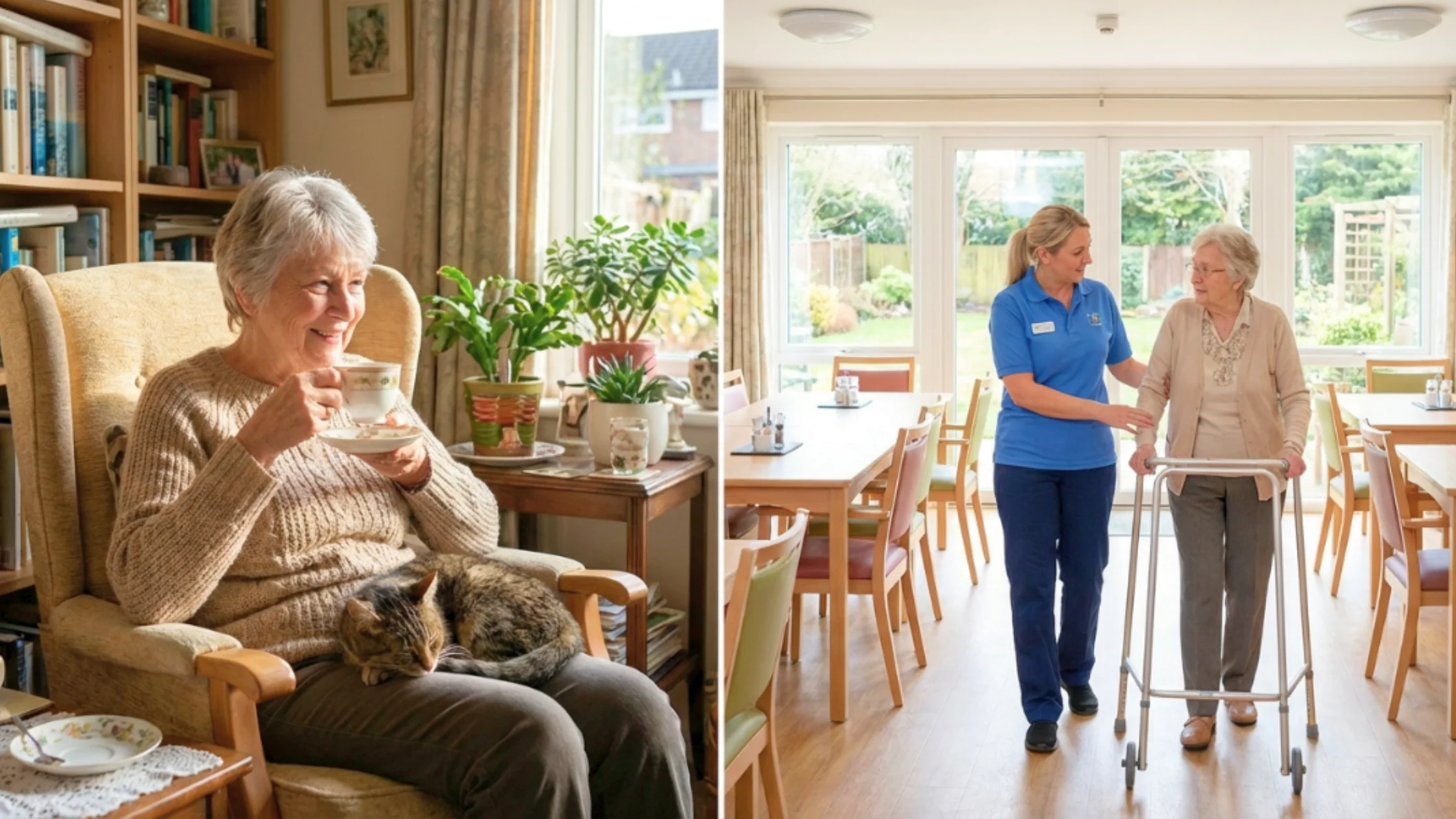
Many families struggle with the decision between aging in place and assisted living. It is rarely a simple choice. Emotions, finances, safety, and daily care needs all play a role. Some people worry about moving “too early” and losing independence.
Others fear waiting “too long” and facing a crisis. Assumptions often guide decisions more than real needs. The best choice depends on current abilities, support systems, and risk levels, not general beliefs.
This guide helps readers compare the options clearly and evaluate which truly fits their situation before making an important financial decision.
What Aging in Place Really Involves?
Aging in place means living safely and independently at home with the right support systems. It usually includes home safety upgrades, daily routines, and some form of monitoring or check-in structure. It does not mean managing everything alone.
Support can come from technology, community services, paid help, or family, even if family is not nearby.
One major advantage is flexibility. Support levels can increase gradually as needs change. Aging in place works best when it is planned, structured, and supported, not improvised.
What Assisted Living Typically Provides?
Assisted living communities are designed to provide daily support in a supervised setting. Residents usually have private or semi-private living spaces within a managed facility.
Services often include help with daily activities, medication management, meals, housekeeping, and scheduled wellness checks. Social activities and shared spaces are common features. Staff are available on-site.
Assisted living is not the same as medical nursing care, but it offers structured daily support. It suits individuals who need regular assistance but not full medical supervision.
Pros of Aging in Place
Aging in place allows people to remain in familiar surroundings and maintain established routines. Familiar spaces reduce stress and confusion. Many people feel more comfortable and confident at home.
It also provides a stronger sense of independence and personal control. Care and support can be customised instead of standardised. Home environments can be adapted to personal preferences.
When planned properly, aging in place can cost less over the long term than facility living. Expenses can be phased and prioritised rather than bundled into one monthly fee.
Cons of Aging in Place
Aging in place requires proactive planning and coordination. Safety upgrades, routines, and monitoring systems must be put in place in advance. Without planning, risks increase.
Responsibility for managing the home and arranging care falls on the individual or the family. Immediate help is not always available unless systems are in place.
Without support networks or structured check-ins, aging in place can become difficult. It works best with preparation, not assumption.
Pros of Assisted Living
Assisted living provides built-in supervision and daily support with care. Staff are available to help with routine needs and unexpected issues. It reduces risk exposure.
Residents have fewer daily responsibilities, such as cooking or cleaning. Structured activities support social interaction and mental engagement.
Families often experience peace of mind knowing support is always nearby. For individuals with increasing care needs, assisted living can provide stability and predictability.
Cons of Assisted Living
Assisted living reduces personal independence and privacy. Shared environments require compromise in routines and preferences.
Monthly costs are usually high and ongoing. Fees may increase over time. Moving also requires emotional adjustment.
Some residents struggle with communal living and loss of personal control. Not everyone adapts comfortably to facility environments.
Key Signs Aging in Place May Still Be the Right Choice
Aging in place remains suitable when a person can manage daily activities safely with modest support. Health is generally stable and needs are predictable.
The individual is willing to accept home modifications or outside help when needed. Strong routines are in place.
Monitoring systems or check-in structures exist. When safety can be addressed at home, aging in place often remains viable.
Warning Signs Assisted Living May Be Needed
Frequent falls or repeated medical emergencies are strong warning signs. Difficulty managing medications or daily hygiene also signals increased risk.
If social isolation is harming health or mood, facility living may offer better engagement. When safety risks cannot be corrected through home upgrades, supervised living becomes more appropriate.
Repeated near-crisis events usually indicate that home support is no longer sufficient.
Cost Comparison: Aging in Place vs Assisted Living
Assisted living in the U.S. typically involves a high monthly cost that includes housing, meals, and care services. These are recurring bundled expenses.
Aging in place usually includes one-time home modification costs plus smaller ongoing service expenses. Costs are more variable and adjustable.
However, comparisons must include hidden costs such as home maintenance, technology subscriptions, and paid support. Long-term budgeting is essential. Neither option is automatically cheaper. It depends on needs and planning.
Emotional and Lifestyle Factors to Consider
Comfort and preference matter. Some people strongly prefer home environments. Others prefer structured communities.
Independence versus daily support is a personal balance. Mental well-being is closely tied to satisfaction with the living environment.
Family involvement levels also influence the decision. Emotional comfort is as important as physical safety.
How Technology and Home Modifications Affect the Decision?
Safety upgrades such as grab bars, lighting, and non-slip flooring can extend the feasibility of aging in place. Monitoring and alert systems add another layer of safety.
Smart tools can delay the need for facility care when used correctly. However, technology should support human care, not replace it.
Tools extend independence but do not eliminate the need for support planning.
Making the Decision Without Pressure
Decisions made during emergencies are often rushed and stressful. It is better to evaluate options before a crisis happens.
Honest conversations help clarify needs and preferences. Plans can be revisited as conditions change.
No decision has to be permanent. Transitions can happen later if needed.
Integrating the Decision Into an Aging-in-Place Plan
Housing decisions should remain flexible. Financial and emotional preparation should happen early.
Living choices should match health needs and risk levels, not assumptions. Plans should be reviewed regularly.
Adaptability protects long-term independence.
Conclusion
There is no single “right” living choice for everyone. Different people need different levels of support at different times. The goal is to stay safe, comfortable, and able to live well. Care decisions work best when based on real needs rather than fear or delay.
Planning ahead allows for thoughtful choices rather than rushed ones. With clear evaluation and flexibility, families can choose the path that supports both independence and well-being.
Leave a Reply