Bathroom falls are among the leading causes of older adults losing independence. As balance, strength, and reaction time change with age, everyday bathing tasks can quickly become risky.
Thoughtful upgrades like walk-in tubs and walk-in showers can considerably lower that risk while supporting those who want to age in place safely and comfortably.
In this guide, we’ll explain how these options operate, who they’re best for, key safety features to look for in 2026, approximate costs in the U.S., and how Medicare and other programs typically treat these upgrades.
Why Bathroom Safety Matters as We Age
For many older adults in the U.S., the bathroom becomes the most hazardous room in the house. Common age-related changes such as reduced muscle strength, joint pain, slower reflexes, and reduced vision make slips and trips more likely – especially on wet surfaces.
Traditional bathtubs with high sides require people to balance on one leg as they step in or out, significantly increasing the risk of falls.
Because a single bathroom fall can lead to fractures, hospital stays, and long-term loss of independence, it’s far safer to address bathroom safety early rather than waiting until after an accident happens.
Walk-In Tubs: What They Are and Who They’re For
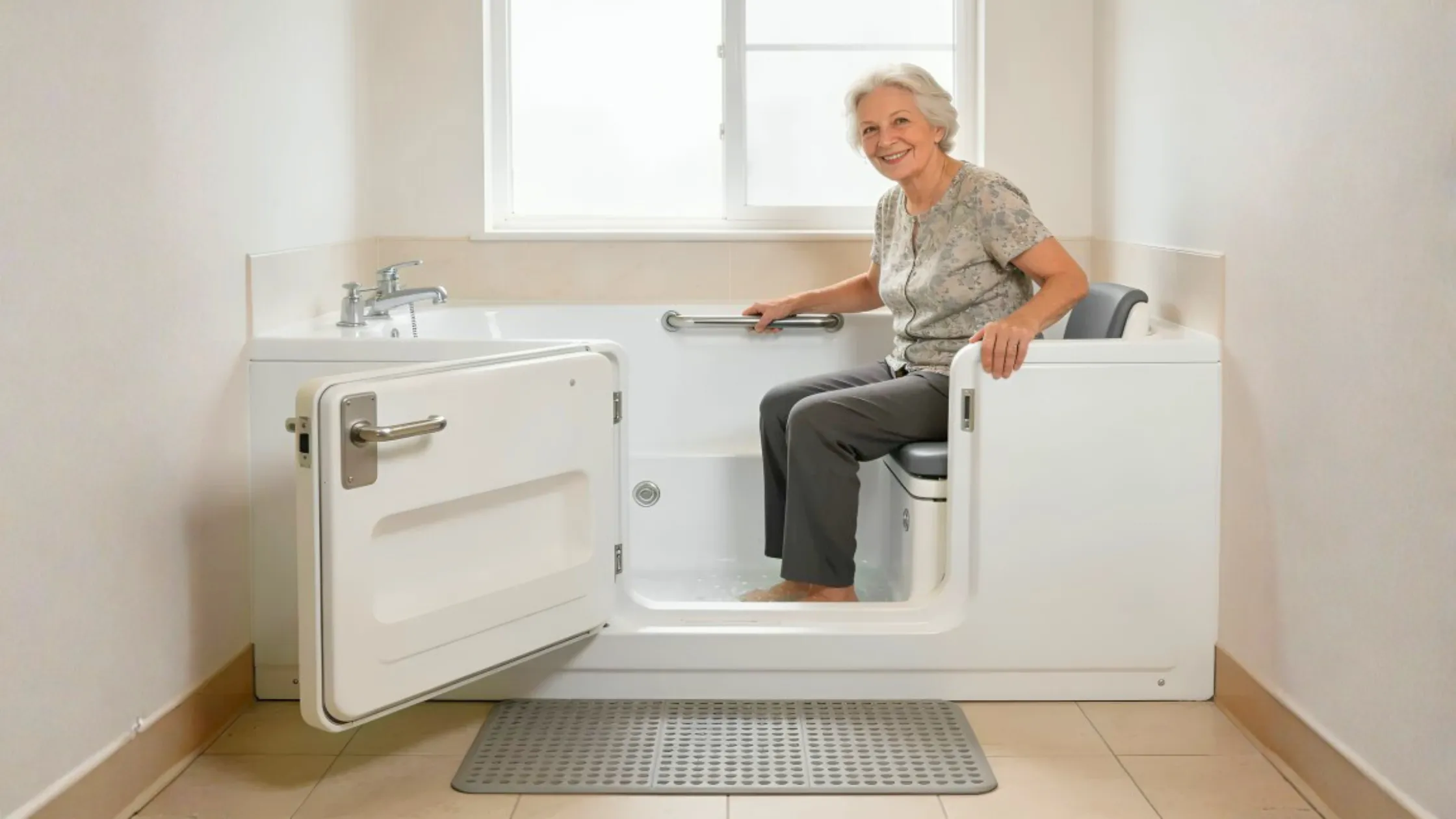
A walk-in tub is a deep bathtub with a built-in, watertight door that allows users to step in over a low threshold. Once inside, the door seals shut and the tub fills while the user remains seated.
Most models include chair-height built-in seating, grab bars, non-skid flooring, and handheld showerheads. Many also offer optional hydrotherapy or air jets to help ease joint stiffness and muscle pain.
Walk-in tubs are especially helpful for seniors who enjoy soaking baths, have moderate mobility limitations, or live with arthritis or chronic pain that makes standing difficult. They’re also a strong option for people with a history of falls who need stable seating and secure support surfaces during bathing.
Key Benefits of Walk-In Tubs
- Stability and seated bathing
Built-in seats, grab bars, and low step-in heights help users stay supported while entering, bathing, and exiting.
- Added comfort and support
Deeper water, ergonomic seating, and optional therapy features can make bathing more comfortable and relaxing.
Walk-In Showers: What They Are and Who They’re For
A walk-in shower typically features a low or zero-threshold entry, a wide or open enclosure, and slip-resistant flooring, allowing users to step straight in without climbing over a tub wall.
Common safety features include grab bars, built-in or fold-down seating, handheld showerheads, and easy-to-reach controls.
Walk-in showers are often a better fit for seniors who prefer quick showers, households with multiple generations sharing one bathroom, or homes with limited floor space.
When designed as barrier-free or roll-in showers, they can also be easier to navigate for people who use walkers or wheelchairs.
Key Benefits of Walk-In Showers
- Easier entry and exit
Low or zero thresholds and wide openings reduce tripping hazards and support more natural movement.
- Better fit for smaller or shared bathrooms
Walk-in showers can be space-efficient and practical for both seniors and other household members.
Walk-In Tubs vs. Walk-In Showers: Key Differences
The right choice depends on comfort, space, and long-term mobility needs.
Walk-in tubs focus on seated soaking, which many people with joint pain or limited stamina find more comfortable than standing.
Walk-in showers, on the other hand, emphasize quick, upright bathing with minimal wait time.
Showers usually require less floor space and are easier to integrate into smaller bathrooms, while walk-in tubs may need more room and sometimes plumbing changes.
When deciding, it’s important to consider not only current mobility but also how needs may change over the next five to ten years, including the possible use of mobility aids.
Daily habits matter too – someone who enjoys long, therapeutic soaks may prefer a tub, while someone who values fast routines may be happier with a shower.
Safety Features to Look For in 2026
Modern walk-in tubs and showers offer safety features that go beyond basic building codes.
Look for low or zero-threshold entry, slip-resistant flooring, and multiple well-placed grab bars to provide steady handholds throughout the bathing process.
Built-in or fold-down seating allows for safer seated bathing, while handheld showerheads make it easier to rinse while seated or assisted.
Clear, easy-turn controls and thermostatic or anti-scald valves are also important for preventing burns and keeping consistent water temperature.
Cost of Walk-In Tubs and Walk-In Showers in the U.S.
Costs vary widely depending on features, brand, installation complexity, and the extent of remodeling required.
In the U.S., basic walk-in tubs often start around $2,000 to $4,000, while more advanced models with therapy features can range from $5,000 to $20,000 or more.
Installation may add $2,500 to $8,000, especially if plumbing, electrical systems, or the bathroom layout needs modification.
Walk-in showers also vary in price based on materials and customization, but many projects fall within a similar overall range once labor and waterproofing are included.
Leading Walk-In Tub & Shower Brands
- Kohler – Known for very low step-in heights, molded seating, strong grab bars, and optional hydrotherapy features. Typically positioned at mid-to-high price points with a reputation for durability.
- Safe Step – Focuses on safety-first designs for seniors, offering customized walk-in tubs and showers with professional installation as a full-service solution.
- American Standard – Offers a wide selection of walk-in tubs, including soaker, air, and whirlpool models, with pricing that fits a range of budgets.
- Ella – Produces walk-in tubs and tub-shower combinations with therapy options such as dual drains and jets, appealing to buyers looking for comfort without ultra-luxury pricing.
- Independent regional installers – Local companies often bundle products, customization, and installation, which can be helpful for homeowners who want hands-on support and local service.
Does Medicare Cover Walk-In Tubs or Showers?
Original Medicare generally does not cover walk-in tubs or walk-in showers because they are considered permanent home modifications rather than durable medical equipment. Coverage under Medicare Parts A and B is rare.
Some Medicare Advantage plans, Medicaid programs, Veterans Affairs benefits, or state assistance programs may offer limited support for home safety upgrades in certain cases.
Because eligibility and coverage rules vary, it’s important to review individual plan details and speak with medical professionals and insurers before making a purchase.
When It May Be Time to Upgrade Your Bathroom
Warning signs include needing help to step into the tub, holding onto unstable fixtures, avoiding bathing out of fear, or experiencing near-falls.
Upgrading to a walk-in tub or shower before a serious accident occurs can reduce the risk of injury and help maintain independence.
When planning, think beyond short-term needs and choose solutions that will still work if mobility declines in the future.
Conclusion
Safer bathing options like walk-in tubs and walk-in showers can make a considerable difference in helping you stay independent and comfortable at home as you age.
By weighing mobility needs, bathroom layout, budget, and personal preferences – and understanding features, costs, and coverage – you can choose an option that supports both well-being and dignity for years to come.
Leave a Reply